Truck Brake Shoe Sizes Explained: 419mm vs 318mm Drums and Shoe Width
Brake Shoe Assembly · Nov 2026 · 6 min read
A drum brake shoe is defined by two numbers that are often confused: the brake drum diameter and the shoe width. Get either wrong and the shoe will not contact the drum correctly — or will not fit at all. This guide explains the two dominant drum sizes on heavy trucks and buses (419 mm and 318 mm), how width changes the application, and how FMSI numbers such as 4707, 4515 and 4551 map to them.
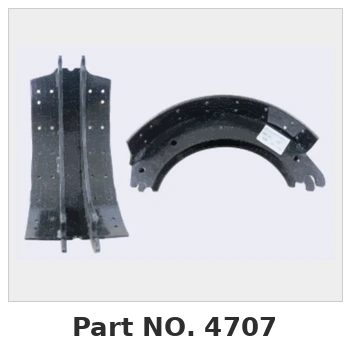
Drum diameter vs shoe width: two different things
The drum diameter is the inside diameter of the brake drum — typically written as Ø419 mm or Ø318 mm on American-type shoes. The shoe width is the axial face width of the friction lining that presses against the drum, commonly 177.8 mm, 219 mm, 127 mm or 101.5 mm. The diameter decides whether the shoe arcs match the drum; the width decides the contact area and therefore the braking torque and heat capacity.
A wider shoe spreads the same stopping energy over a larger lining area, reducing temperature and wear — that is why steer and drive axles on heavy trucks often use wider shoes. Trailer axles and light-duty applications use narrower shoes.
The 419 mm family
The Ø419 mm drum is the standard for North American heavy trucks and trailers. Within this family, the width separates the applications:
| FMSI / Part | Drum × Width | Typical use |
|---|---|---|
| 4707 | 419 × 177.8 mm | Trailer / heavy truck, 16.5" platform |
| 4515 | Ø419 × 177.8 mm | Trailer axles, wide fitment |
| 4709 | 419 × 177.8 mm | Heavy truck trailer |
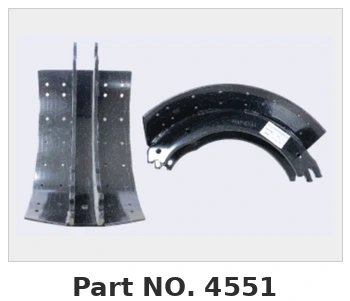
| 4551 | Ø419 × 219 mm | Wide-shoe drive / high-capacity axle |
| 4524Q | 419 × 127 mm | Narrow-shoe trailer application |
| 4311 | Ø419 × 176.5 mm | Volvo-equipped heavy truck |
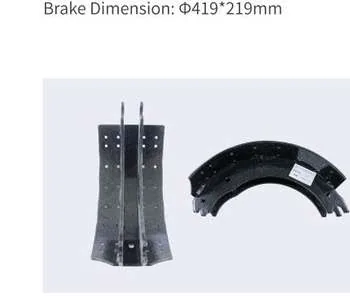
Note that 4707, 4515 and 4709 all share a 419 × 177.8 mm envelope but differ in lining shape, rivet pattern and arc — so the FMSI number, not just the size, must match. For a deeper cross-reference see the 4515 / 4709 / 4711 guide and the 4707 assembly guide.
The 318 mm family
The Ø318 mm drum is common on smaller trucks, buses and light commercial vehicles. Shoes here are narrower, typically 101.5 mm:
| Part | Drum × Width | Note |
|---|---|---|
| 1308E | 318 × 101.5 mm | American-type shoe |
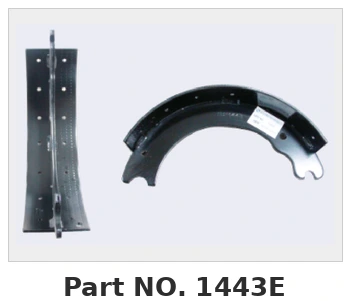
| 1443E | 318 × 101.5 mm | American-type shoe |
FMSI numbers explained
FMSI numbers (4707, 4515, 4551 and so on) are the North American standard for brake shoe friction identification. Unlike the European WVA system used for disc pads and linings, FMSI codes identify the shoe's arc, width and lining shape as a complete assembly. When ordering American-type shoes, quote the FMSI number first and the dimensions second — the number resolves ambiguities that the size alone cannot.
How to measure and verify before ordering
- Measure the inside diameter of the drum with a diameter tape or caliper — confirm 419 mm or 318 mm.
- Measure the friction lining width across the shoe face (177.8, 219, 127 or 101.5 mm).
- Count the rivet holes and note their pattern and the arc length of the shoe.
- Read the FMSI or OE number stamped on the shoe table.
- Match all four data points to the product page before placing the order.
Factory-direct shoes, cross-referenced
SAITE Friction produces both 419 mm and 318 mm American-type shoes under ECE R90 and IATF 16949 control, with riveted or bonded linings to suit the application. If your number is not listed, send the drum diameter, shoe width and a photo of the old shoe and we will confirm the match within one working day.
Related products
- 4707 Brake Shoe Assembly
- 4515 Brake Shoe Assembly
- 4551 Brake Shoe Assembly
- 1443E Brake Shoe
- All American-Type Brake Shoes →
Need a drum-size or FMSI cross-reference?
Send the drum diameter, shoe width and your OE/FMSI number — we return a confirmed match with factory pricing.