Brake Lining Material Tests Explained: Friction, Shear, Swelling, Compressibility and Asbestos
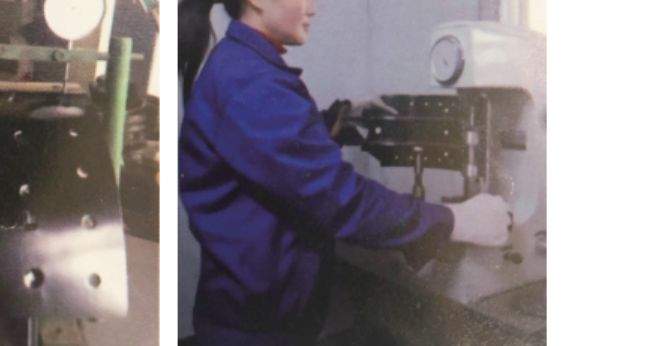
Before a brake lining ever reaches the dynamometer — and long before it is approved under ECE R90 or FMVSS 121 — its chemistry and physical structure are verified by material-level tests. These are the tests that catch a bad formulation early: friction stability, mechanical strength, dimensional behaviour and the absolute requirement of being asbestos-free. This article walks through each test and the reports SAITE holds.
1. Friction Coefficient Tests (Drum Lining & Disc Pads)
Friction coefficient is the heart of any friction material. Samples are tested under controlled pressure, temperature and speed to measure the coefficient in different service conditions. SAITE holds friction coefficient reports for both product families:
- Drum brake lining — 3-item friction coefficient test report 140757 (drum lining samples) and the 6-item drum sample series 09577/12269/13186;
- Disc brake pads — 4-item friction coefficient test report 140411 (large disc pad samples).
These reports, issued by accredited Chinese testing laboratories, confirm that our linings hold a stable friction level through the defined test matrix — the foundation for the fade and recovery behaviour we demonstrate at system level on the dynamometer.
2. SAE J661 — The Friction QC Standard
SAE J661 is the global quality-control test procedure for brake lining friction: it measures friction and wear through a first-fade, recovery and wear schedule on a small sample. SAITE's SAE J661 report covers material NA51 (baseline friction 0.7), documenting the fade/recovery curve that shows how the compound behaves as temperature climbs and then recovers. J661 is the quick, repeatable check every lining supplier runs — and the data we release with it lets a technical buyer compare compounds directly.
3. Asbestos Verification — Non-Negotiable
All SAITE friction materials are asbestos-free, and we prove it with two levels of evidence:
- Qualitative asbestos analysis (report 12315) — drum lining material tested for asbestos content;
- Finished-goods non-asbestos tests (report 13294) — the completed products verified asbestos-free, matching the "asbestos-free" scope of our IATF 16949 certificate.
For EU/UK markets this aligns directly with the REACH restrictions and the ECE R90 requirement that replacement linings be asbestos-free — one more reason our drum lining and disc pad ranges are accepted by distributors across Europe.
4. Physical & Mechanical Tests
| Test | Report No. | What It Verifies |
|---|---|---|
| Compressibility | 13022 | How much the lining compresses under load — affects pedal feel and drum clearance |
| Swelling rate | 13021 | Dimensional growth under heat/humidity — keeps the lining stable in the brake |
| Inner shear strength | 13023 | Bond strength of the lining material — resistance to cracking and delamination |
| Resistance to atmosphere (5 items) | 13024 | Behaviour under temperature, humidity and atmospheric exposure — long-term stability |
These four properties determine real-world reliability: a lining that swells, softens or loses bond strength after months in service is dangerous regardless of its laboratory friction number. The reports cover our standard drum lining and WVA 19094 family.
5. JT/T 1178.2 — Brake Shoe Assembly Performance (China)
For the Chinese market, JT/T 1178.2-2019 is the operating safety standard for commercial vehicles. Our drum brake shoe assembly HBP-4551 was tested at the National Automobile Quality Supervision & Inspection Center (Xiangyang) — report LG202219WZ, 22 June 2020 — and conformed to JT/T 1178.2-2019, tested under GB/T 22309 and GB/T 22311 methods. The 4551 shoe is the drum brake shoe assembly used on Chinese trailer axles and matches the 16.5"×7" family we export.
The Complete Evidence Chain
Put together, the material tests and the system tests give a buyer the full picture:
- Chemistry: asbestos-free (12315, 13294) and stable compound;
- Physical structure: compressibility, swelling, shear, atmosphere resistance (13022/13021/13023/13024);
- Friction QC: SAE J661 NA51;
- System performance: FMVSS 121 dynamometer and JT/T 1178.2 assembly tests;
- Approval: E11 ECE R90 certificates for the EU/UK market.
All reports are released to customers on request from our Download Center — certified PDFs are emailed after your WhatsApp inquiry.
FAQ
Q: Are SAITE linings asbestos-free?
A: Yes. We hold qualitative asbestos analysis report 12315 and finished-goods non-asbestos test report 13294, and the "asbestos-free" scope is part of our IATF 16949 certificate.
Q: What does the SAE J661 report show?
A: It measures friction and wear through first fade, recovery and wear phases for material NA51 (baseline 0.7) — the standard friction QC test for brake linings.
Q: What is JT/T 1178.2?
A: It is the Chinese operating safety standard for commercial vehicles; our HBP-4551 brake shoe assembly passed testing at the National Automobile Quality Supervision & Inspection Center (report LG202219WZ).
Q: Can I request the material test reports?
A: Yes — request them via WhatsApp on our Download Center and the PDFs are emailed to you.
Need Certified Heavy-Duty Brake Parts?
SAITE Friction is an IATF 16949 certified friction material manufacturer in Huangshi, China. Every lining and pad ships with ECE R90 / E11 documentation and test reports available on request.