Brake Fade Explained: Causes, Types and Prevention for Heavy Trucks
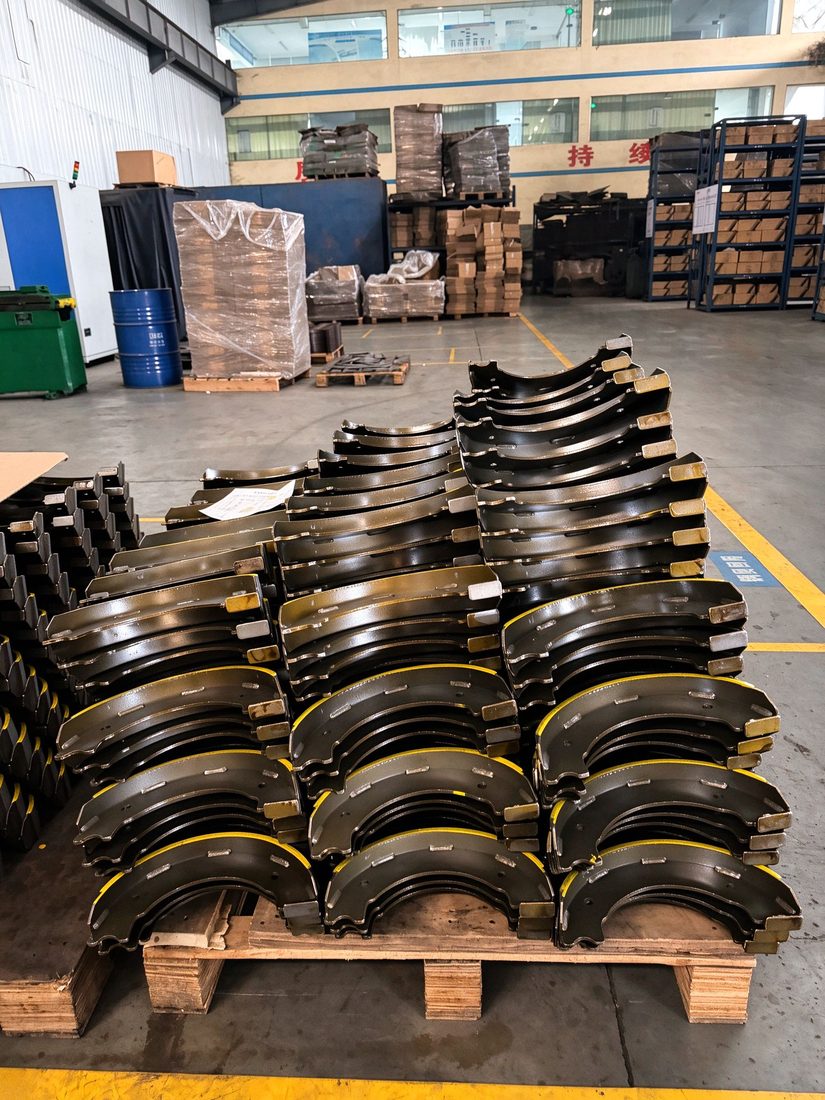
Brake fade is the gradual loss of braking power under sustained or repeated braking — and on heavy trucks it is one of the most dangerous conditions a driver can face. Understanding the types of fade and their root causes is the first step to prevention.
What Causes Brake Fade?
Friction brakes convert kinetic energy into heat. When the heat generated exceeds what the brake assembly can dissipate, performance drops. Three distinct fade mechanisms exist:
1. Friction (Thermal) Fade
At high temperatures, the friction coefficient of the lining material drops. This is normal for every friction material — the key is where the curve falls. Premium semi-metallic linings such as 19094 / BC37 drum lining are formulated to hold their coefficient well past 300°C; low-grade linings fade much earlier and recover poorly.
2. Fluid Boil / Vapor Lock (Hydraulic Systems)
On hydraulic-braked vehicles, boiling brake fluid creates compressible vapor in the lines — the pedal goes soft or to the floor. Air disc brakes avoid this mechanism, which is one reason European trucks moved to air discs; but drum brake systems with hydraulic actuation remain vulnerable.
3. Mechanical / Adjustment Fade
On S-cam drum brakes, as linings wear, the shoe must travel farther to contact the drum. Without automatic slack adjusters working correctly, the brake loses effectiveness until readjusted. This is a maintenance issue, not a material issue — and it is fully preventable.
Why Heavy Trucks Are Especially at Risk
- Long downhill grades: sustained braking generates continuous heat with no recovery time.
- High axle loads: more energy per stop means faster temperature rise.
- Trailer combinations: BPW and other trailer axles add brake demand far beyond the tractor alone.
Prevention Checklist
- Use retarders and engine braking first: let auxiliary braking hold speed on grades; save the service brakes for final control.
- Select the right friction: high-temperature-rated linings and European 432 mm discs for demanding routes.
- Maintain slack adjusters: correct stroke length keeps shoes close to the drum.
- Check cooling: keep drums and rotors clean of grease and mud; verify proper air flow around the brakes.
- Cool down before stopping: after a long descent, avoid holding the brakes at standstill with hot linings pressed against the drum — it causes lining "memory" and instant glazing.
How to Recognize Fade Before It Is Critical
Signs include a longer stopping distance at the same pedal/slack movement, a burning smell, or drums/rotors visibly glowing or discolored. If you feel the first signs of fade on a grade, immediately downshift, engage the retarder and find a safe pull-off — do not pump the brakes harder.
Drum vs. Disc: How Each System Fades
The fade profile differs fundamentally between the two architectures. S-cam drum brakes (Meritor Q, Eaton, BPW axles) have large thermal mass and absorb heat well, but they suffer from mechanical fade as linings wear and from slow heat dissipation — the enclosed drum holds temperature longer. Air disc brakes dissipate heat faster through open calipers and ventilated rotors, but their smaller thermal mass can spike temperature on aggressive stops. Neither system is immune: the question is how quickly heat is generated versus removed, which is why disc brakes shine on long European descents while drums remain dominant where cost and dust containment matter.
Real-World Temperature Data
On a loaded European truck descending a 7% grade, drum temperatures routinely reach 300–400°C without auxiliary braking; with retarder use they stay below 200°C. Friction fade in premium 19094 / BC37 linings typically begins above 350°C and recovers fully on cooling; economy linings can lose 30–40% of their coefficient by 250°C and recover poorly. This is why lining quality is not a "nice to have" — it is the difference between a controllable descent and a runaway truck.
The Maintenance Log: Your Best Prevention Tool
Keep a per-vehicle brake log: lining thickness at each service, slack adjuster stroke, drum/rotor measurements, and any fade events reported by drivers. Trend data turns fade from a scary surprise into a predictable maintenance event. A fleet that logs brakes replaces linings at 60–70% wear instead of at 100% wear with a roadside failure — and the cost of preventive replacement is a fraction of an emergency repair.
Cold Weather and Water Fade
Two more fade-like conditions deserve mention. Water fade occurs when brakes are driven through deep water: the friction film is displaced and initial stops are weak until the heat dries the assembly. Test brakes lightly after any deep crossing. Cold brakes also under-perform until they reach operating temperature — do not expect full stopping power on the first stop of a cold winter morning.
Emergency Protocol: What to Do When Fade Starts
The correct response to early fade is the opposite of instinct: do not pump harder. Downshift to the lowest practical gear, engage the retarder and exhaust brake, signal early, and find a safe place to stop and cool the brakes. On a grade, once you feel fade, the remaining brake capability is finite — treating it as an emergency immediately, rather than trying to "power through," is what separates a controlled stop from a runaway incident.
Key Takeaways
- Three fade types: friction (thermal), fluid boil, and mechanical adjustment fade
- Friction fade starts where the lining's coefficient drops — premium linings hold performance past 300°C
- Retarders + correct slack adjuster stroke are the two highest-impact preventions
- Never hold the brakes at standstill after a long descent — it glazes the lining
Need OE-Grade Replacement Brake Parts?
SAITE Friction is an ISO 9001 / IATF 16949 certified friction material manufacturer in Huangshi, China, supplying OEM-quality heavy-duty brake parts worldwide. Get factory-direct pricing with ECE R90 documentation.