Every brake shoe that leaves our factory goes through 7 precision manufacturing steps. Here is what happens behind the scenes at our 50,000 m² production facility in Huangshi, China.
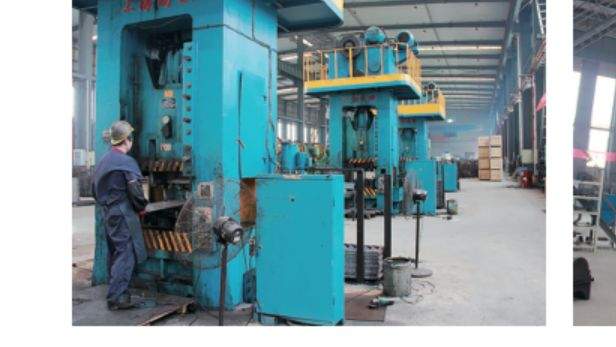
The Manufacturing Process
1. Punch Process
High-strength steel sheets are precision punched into blank shoe shapes. This is the first step — the raw material becomes a rough shoe form ready for further processing.
2. Rebuild / Forming Process
The punched blanks are pressed and shaped to exact curvature. This ensures every shoe matches the drum radius perfectly, giving full contact even braking performance.
3. Boring Process
Machining centers bore pin holes and mounting surfaces to OE tolerances. Precision here means the shoe fits correctly and pivots smoothly during braking.
4. Automatic Welding
Robotic welding units join webs and platforms with consistent, strong welds. No human error — every weld bead is identical across 10 million units per year.
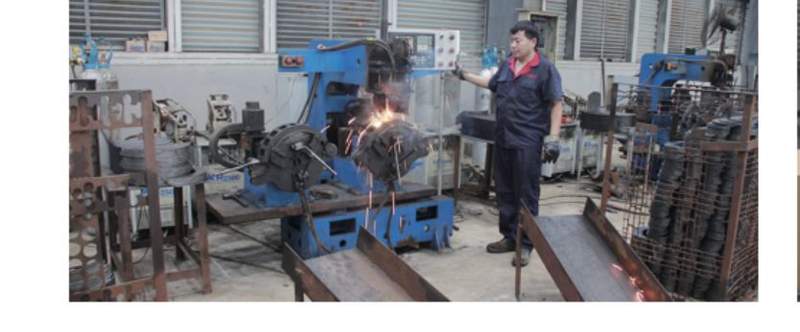
5. Automatic Riveting
Friction lining is hydraulically riveted to the shoe under controlled pressure. We use both riveted and bonded methods depending on the application and customer requirement.
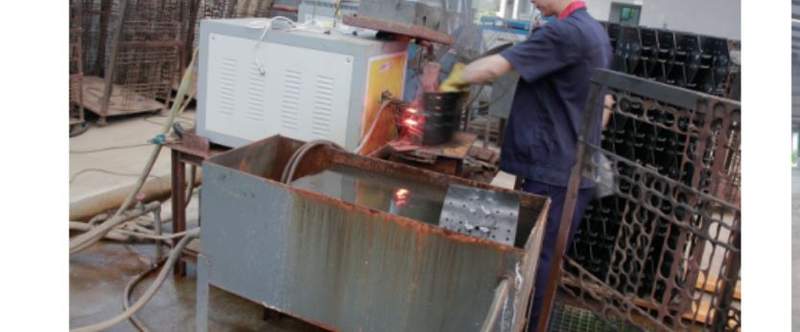
6. Heat Treatment Process
High-frequency induction hardening on shoe ends and contact surfaces. Quench depth: 1.5–2mm, hardness HRC 28–45. This prevents premature wear and extends service life by 30%.
7. E-Coat Process
Electrophoretic coating for full corrosion protection. The entire shoe is dipped — even hidden internal surfaces get covered. Salt spray tested to international standards, resisting rust through years of service.
Why It Matters
These 7 steps are not just our internal process — they are the reason our brake shoes last 70,000–120,000 km on the road. Every batch is traceable, every machine is calibrated daily, and every finished shoe passes through our physical and chemical testing lab before shipping.
When you buy SAITE brake shoes, you are not just buying a metal part — you are buying 28 years of manufacturing know-how, built step by step, unit by unit. Our brake shoe assemblies cover European-type BPW 180, BPW 200 and American-type 4707, 4709 series for trucks and trailers.